How does video podcast production differ from a standard shoot?
Video podcast production vs standard video shoot: choose conversation for expertise or a standard shoot for visual stories. Compare the workflows.


Video podcast production captures a sustained conversation with synchronized sound and picture; a standard video shoot builds a planned visual story from selected scenes, interviews, or demonstrations. Choose podcast production when the conversation is the content, and choose a standard shoot when the pictures must carry the message—the difference reaches beyond filming into preparation, directing, and editing.
TL;DR
Video podcast production protects the flow of a conversation. A standard shoot organizes footage around a planned final message. Both require deliberate audio, lighting, framing, and editing, but they use those tools differently.
For your 2026 production brief, compare the work you need completed—not just the equipment available. The guide to whether podcast studios provide equipment addresses a separate question: who supplies the tools does not establish who runs the session or finishes the content.
Best for
Planning
Recording priority
Camera approach
Audio approach
Editing approach
Main strength
Main limitation
These are production approaches, not rigid categories. A standard shoot can include an unscripted interview, and a podcast can include planned visual segments. Choose the workflow that supports the main deliverable, then specify the exceptions.
A mismatch leaves your team solving the wrong problem. An entrepreneur who needs a recurring interview show needs conversational direction and repeatable production; a business showing how a physical process works needs footage of that process.
Your 2026 brief should name the audience, the message, and the intended deliverables before discussing cameras. Otherwise, a technically competent recording can still fail to provide the material your editor needs.
The practical distinction is responsibility. A room, equipment, a production crew, an edited episode, and a publishing plan are different parts of the job. Define which parts you are buying rather than treating “video production” as a complete scope.
Choose video podcast production when your audience needs to hear how you think. Interviews, informed discussions, and explanations give entrepreneurs and personal brands space to develop an argument rather than compress everything into a scripted statement.
Preparation still matters. Write an episode promise, organize the discussion into useful topics, and identify examples the guest can explain. A conversational format is not permission to arrive without a direction.
During recording, the production team needs to follow both the discussion and the technical capture. A speaker can turn away from a microphone, interrupt another person, or reference something the audience cannot see. Those moments require attention while the conversation continues.
The advantage is depth; the trade-off is dependence on the discussion. If an answer stays vague, an editor cannot manufacture the missing example. Ask the follow-up question during recording, even when it briefly changes the planned sequence.
For recurring production, document the set arrangement, framing, and episode structure. Consistency gives the next session a clear starting point without requiring every conversation to sound identical.
Choose a standard shoot when the audience needs to see something happen. A demonstration, a location-based brand story, or a scripted campaign needs images selected for that purpose—not simply footage of people discussing it.
Start with what the finished video must communicate. Then identify the actions, locations, interview answers, and supporting footage required to make that message understandable. A shot list turns the intended story into recording tasks.
The director can stop, adjust a performance, change the framing, or repeat an action. That control helps when a specific visual detail matters. It also means the session does not necessarily preserve the uninterrupted experience of a conversation.
The advantage is visual control; the trade-off is more scene-specific coordination. If the message depends on a demonstration, the necessary people, objects, and setting must be ready. A polished interview cannot replace footage that was never captured.
A standard shoot also suits recurring content when every installment needs distinct demonstrations or scenes. Frequency alone does not make something a podcast. The format should follow the viewing experience.
The differences come from what you need to capture and how the finished content will work. Use these factors when comparing proposals for 2026:
Do not judge scope by how similar the rooms or cameras look. Two sessions can use comparable equipment while producing entirely different source material.
Use a brief that connects the business objective to the recording plan. Keep it practical enough that your producer, guest, and editor can use it without interpreting what you meant.
State what the viewer should understand after watching. “Explain how I evaluate a business decision” points toward a conversation; “show how this process works” calls for a visual demonstration.
Name the intended audience as well. An explanation for a first-time buyer needs different context from a discussion aimed at experienced peers. That decision shapes questions, examples, and editing.
Choose the dominant viewing experience: sustained discussion or constructed visual story. If you need both, separate the conversational material from the planned visual segments in the brief.
Avoid asking an interview recording to become a demonstration after the session. The editor needs the relevant actions and details on camera, not just references to them in dialogue.
For a podcast, prepare discussion prompts, guest context, and the examples you want explained. For a standard shoot, prepare the required scenes, interview prompts, and supporting shots.
Clarify who owns production decisions during the session. You should know who guides the content and who monitors the recording before you sit down or step onto the set.
List the finished assets, review responsibilities, and delivery expectations. Distinguish the main video from excerpts, audio versions, captions, and other requested outputs rather than assuming they are included.
Your 2026 publishing plan should work backward from that agreed handoff. A recording date is not a delivery date, and an initial edit is not automatically an approved final asset.
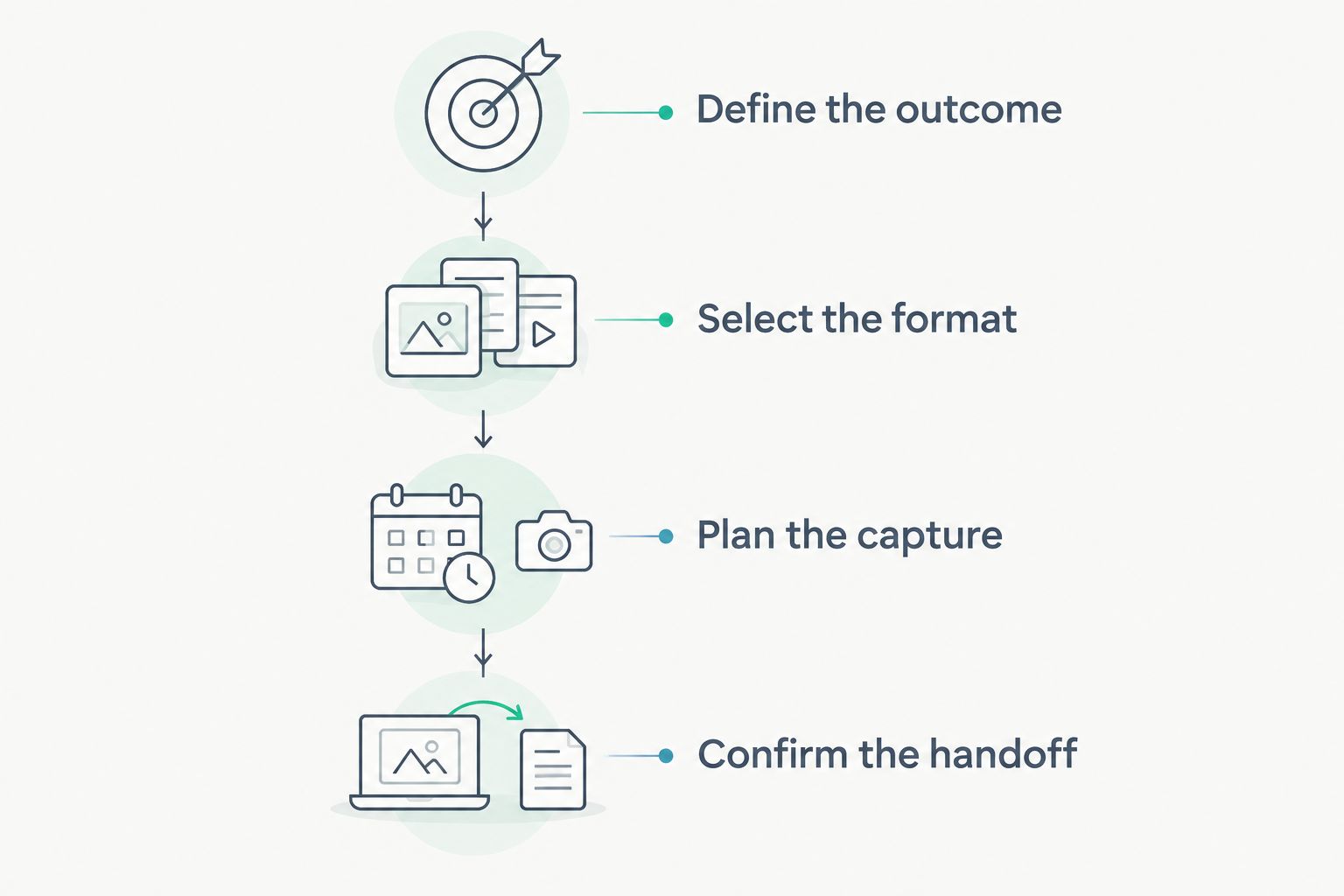
Agree on the finished content before planning how to record it.
Dialed Studios is best for Denver entrepreneurs and personal brands seeking done-for-you podcast and video production. The service combines fully customized branded sets, studio equipment, a dedicated producer and engineer, editing, and content strategy. That is a production partnership, not simply access to a room.
The guaranteed 48-hour editing turnaround gives you a concrete delivery commitment to discuss when planning content. Confirm which deliverables and review stages the guarantee covers for your project; do not extend an editing commitment to unrelated work by assumption.
For podcast production, Dialed Studios brings together the set, recording support, and post-production responsibilities that otherwise need separate coordination. Fully customized branded sets support a deliberate on-camera setting, while the dedicated producer and engineer provide production support beyond equipment access.
The trade-off is scope fit. If you only need an unattended room, a done-for-you team is a different service. If your video depends on location footage or specialized demonstrations, discuss those requirements rather than assuming a studio session covers them.
Review Dialed Studios against the work you want handled, then ask for a scope that distinguishes production, editing, and content strategy. For your 2026 schedule, use the guaranteed 48-hour editing turnaround as a planning commitment—not a substitute for defining the deliverables.
Plan your production
Discuss fully customized branded sets, dedicated production support, and the guaranteed 48-hour editing turnaround.
A standard shoot can produce podcast material when the recording includes a coherent conversation and intelligible audio. Short answers captured for a campaign do not automatically form a useful standalone episode.
Plan the podcast version before recording. Give speakers enough room to explain their ideas, and make sure visual references remain understandable to someone listening without the picture.
Multiple cameras are not what makes a recording a video podcast. Additional views give the editor different framing choices, but clear speech and a useful discussion remain essential.
Choose camera coverage around the participants and intended edit. Do not treat a larger camera package as proof that the production team will guide the conversation or deliver a finished episode.
Record separate clips when the message needs tighter wording, a demonstration, or context the main conversation does not contain. Extract clips from the episode when the answer already stands on its own.
Before ending the session, check whether the useful moments identify the subject clearly. A strong excerpt should not depend on an introduction that appears elsewhere in the episode.
What's the main difference between video podcast production and a standard shoot?
Video podcast production centers on a sustained conversation; a standard shoot captures selected material for a planned visual story. The distinction changes preparation, recording priorities, and editing.
Is a video podcast better for my personal brand?
A video podcast fits a personal brand when the value comes from explanations, interviews, and informed discussion. Choose a standard shoot when viewers need demonstrations or a tightly constructed visual message.
Can I use the same studio for podcasts and other videos?
The same studio can support both formats when its setting, equipment, and production services match the brief. Confirm the specific recording and editing work rather than relying on the studio label.
Do I need a script for a video podcast?
You need a clear discussion plan, not necessarily a word-for-word script. Prepare the episode promise, topic sequence, and concrete examples while leaving room for useful follow-up questions.
Does hiring a studio mean editing is included?
Hiring a studio does not by itself establish that editing is included. Ask whether the scope covers recording access, production support, finished edits, and any additional versions you need.
How quickly does Dialed Studios edit content?
Dialed Studios offers a guaranteed 48-hour editing turnaround. Confirm the deliverables and review stages covered by that guarantee when defining your production scope.
Can I publish the audio from my video podcast separately?
You can publish a separate audio version when the conversation remains understandable without the picture. Plan for clear dialogue and explain visual references aloud, then specify the audio deliverable before recording.
Test your format by removing the picture. If the message still works, you have a basis for an audio-led conversation. If the meaning disappears, plan the visual evidence instead of hoping dialogue will replace it.
Then test the opposite: identify what the viewer gains from watching. A demonstration, a revealing reaction, or a useful visual reference gives the picture a job. Make that job explicit in the brief.