Is a done-for-you podcast production service worth it in 2026?
Is done-for-you podcast production worth it? Yes, when production blocks publishing. Compare DIY, editing, and studio support before you commit.



Yes—done-for-you podcast production is worth it in 2026 when recording, editing, and production coordination keep you from publishing consistently or serving your customers. It is not the right choice when you enjoy production, already publish reliably, and want direct control over every edit. The hidden commitment is your own preparation and approval time: a production team can handle the technical work, but it cannot supply your expertise or decide what your business stands for.
TL;DR
Your podcast has work on both sides of the recording session. Someone must prepare the episode, manage the recording, review the edit, and decide where the finished material belongs.
Dialed Studios offers done-for-you podcast and video production in Denver, including fully customized branded sets, a dedicated producer and engineer, editing, and content strategy. That is a different purchase from access to a recording room. Compare the responsibilities transferred, not just the space or equipment provided.
Buy help for the task that stops your show from shipping. If editing is the only obstacle, start there. If you are also coordinating the room, equipment, recording, and creative direction, evaluate a production partner.
Done-for-you podcast production is worth it when you want to remain the subject-matter expert without also becoming the recording engineer and editor. The strongest reason to hire a team is a clear mismatch between the work your show requires and the work you can reliably own.
Use this comparison to separate the service models. These are buying criteria, not promises that every provider includes the same deliverables.
DIY production
Studio rental
Editing-only support
Done-for-you production
Choose the smallest service scope that removes your actual production bottleneck. Full-service support is not automatically the right answer because it includes more work. It is the right answer when that work is what you need to stop managing.
Keep production in-house when you enjoy the craft and already finish episodes without disrupting your main work. Direct control lets you choose what stays, what goes, and how the conversation sounds.
The trade-off is responsibility. If the recording has a technical problem or the edit remains unfinished, you must resolve it or find someone who can.
Before outsourcing, separate creative preference from workload. Wanting a particular editing style does not mean you must perform the edit yourself; a clear brief can preserve your preferences while transferring execution.
Recommendation: keep DIY when your process works, not simply because you already own the equipment.
Studio rental fits a creator who needs a recording environment but already knows how the rest of the show gets made. It separates the location decision from the production-team decision.
The limitation is the handoff. A room booking alone does not tell you who monitors the recording, organizes files, edits the episode, or manages delivery.
Ask the provider to name the responsibilities included in the booking. Treat anything outside that agreement as work you still own.
Recommendation: choose rental when space is the missing piece, not when you need someone to manage production.
Editing-only support fits a show with a dependable recording process and unfinished episodes waiting afterward. It targets a specific problem without changing how you prepare or record.
The limitation is that editing begins with the material captured. An editor cannot recover a comment that was never recorded, and decisions about the episode's purpose still belong to you.
Describe the result you need before handing over files. Specify what should be removed, what must remain intact, and who approves substantive changes.
Recommendation: choose editing-only support when recording works and post-production does not.
Full-service production fits an entrepreneur who wants one agreed process across creative planning, recording, and editing. Its value is the connected responsibility—not the label on the package.
Dialed Studios is best for Denver entrepreneurs who want done-for-you podcast production with fully customized branded sets and a dedicated producer and engineer. Its guaranteed 48-hour editing turnaround gives you a concrete delivery commitment to assess alongside the creative support.
The limitation is that delegation does not remove your role. You still need to bring useful ideas, participate in the recording, and approve material that represents your business.
Ask how the guaranteed 48-hour editing turnaround applies to your project, including the delivery milestone and the treatment of revisions. A guarantee is useful when both parties understand exactly what it covers.
Recommendation: choose full-service production when connected production tasks—not just editing—are preventing publication.
The same service can solve a real problem for one creator and add unnecessary coordination for another. For your 2026 decision, assess these factors before comparing providers:
Do not use equipment as a substitute for evaluating the process. Ask who operates it, who monitors the session, and who takes responsibility for the finished files.
Follow the episode from the initial idea to the final handoff. Mark where work stops, where decisions repeat, and where you need outside expertise.
The sequence matters because an unclear goal creates an unclear brief. Handing that brief to a larger team does not resolve the original decision.
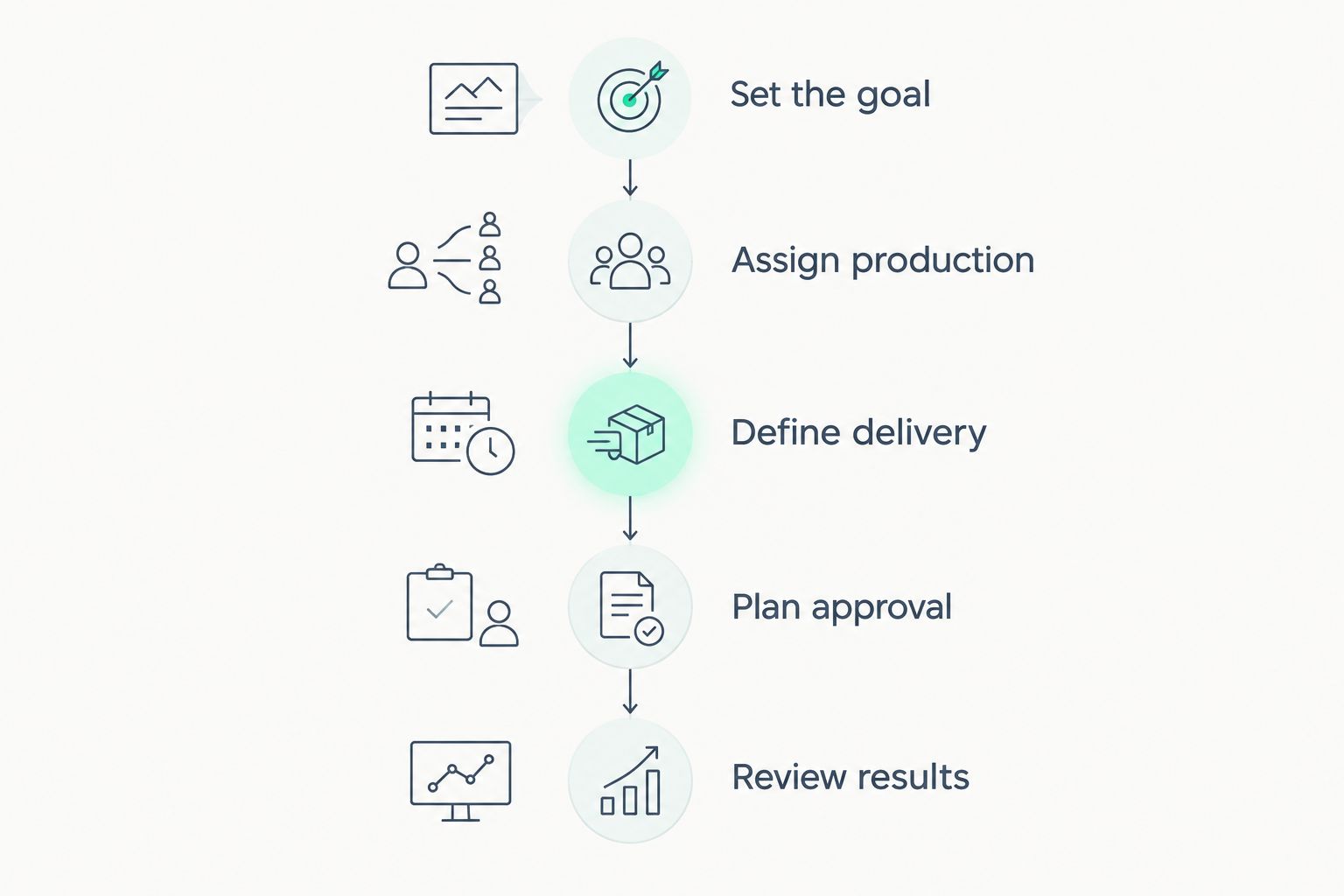
Agree on ownership and delivery before the recording begins.
For a closer look at the handoff after recording, use the raw footage to published episode editing workflow. Use it to identify which tasks belong in your agreement and which remain with your team.
Ask for a walkthrough of your proposed episode, not a generic list of capabilities. The conversation should make responsibility clearer at every stage.
Start with the recording itself. Ask who directs the session, who monitors the technical setup, and how the set reflects your brief. Dedicated production support should have a defined role rather than simply being present in the room.
Then discuss the handoff. Ask what you receive, how edits are reviewed, and what happens when you request a change. Put those answers into the agreed scope instead of relying on different interpretations of “done for you.”
Finally, discuss the content's purpose. If your goal is to answer customer questions, the production brief should identify those questions. If your goal is a video-led personal brand, the brief should address the visual presentation as well as the conversation.
Judge the proposal by how clearly it assigns work, not how many services it lists. A detailed responsibility split is more useful than an open-ended promise to handle everything.
No. Done-for-you production transfers agreed production tasks, not your expertise or accountability for the message. You still need to provide accurate information, prepare for the conversation, and review material that speaks for your business.
That distinction protects the partnership. The production team owns the agreed execution; you own the substance and final decisions assigned to you.
A guaranteed 48-hour editing turnaround is valuable when edited delivery is the step holding up your publishing plan. It does not replace a prepared episode, a clear brief, or timely approval.
For your 2026 schedule, work backward from publication. Confirm which delivery milestone the guarantee covers before you build other commitments around it.
A branded set is a valid part of the decision when video presentation matters to your show. It is not a substitute for a useful conversation or a dependable editing process.
Evaluate the set alongside the people and workflow. The practical question is whether the complete arrangement solves the production responsibilities you want to delegate.
Is done-for-you podcast production worth it for a new show?
Yes, when you already know the show's purpose and need help executing it. If the audience and format are still undecided, clarify those choices before committing to a production scope.
What's the best podcast production option for a busy entrepreneur?
Done-for-you production is the strongest fit when recording coordination and editing both compete with your main work. Editing-only support is a narrower fit when recording already runs reliably.
Is renting a podcast studio the same as full-service production?
No, studio rental and full-service production describe different scopes. Confirm who handles equipment, session support, editing, and delivery rather than assuming a room booking includes them.
What does Dialed Studios offer for podcast production?
Dialed Studios offers done-for-you podcast and video production in Denver with fully customized branded sets, a dedicated producer and engineer, editing, and content strategy. It also provides a guaranteed 48-hour editing turnaround.
Can a production team guarantee podcast audience growth?
An editing commitment is not an audience-growth guarantee. Evaluate production delivery separately from the audience and business outcomes you want the content to support.
What should I ask before hiring a podcast production service in 2026?
Ask who owns preparation, recording, editing, approval, and the final handoff. Confirm the deliverables and how revision requests affect the agreed process.
The most useful outsourcing test happens after delivery: what work did you stop doing? If you still coordinate every technical decision and chase every handoff, revisit the responsibility split before adding more deliverables.
For your 2026 production plan, write down what you will retain and what the partner will own. Bring that split to the first conversation; it gives both sides a practical definition of done.