Can one studio handle both podcast and corporate video needs?
One podcast and corporate video production studio can handle both. Learn what to confirm about sets, crew, editing, and deliverables before booking.


Yes. One podcast and corporate video production studio can handle both when its team plans the recording, set, production support, and editing around each format. Choose a production partner that can execute both briefs—not simply a room with microphones and cameras. Shared equipment does not replace separate messaging, shot planning, or approval requirements.
TL;DR
Yes, provided the studio supports the work behind each format. A podcast needs a conversation worth following. A corporate video needs a defined business message, whether you are introducing your company, explaining a service, or speaking to prospective employees.
The overlap is useful: recording equipment, a controlled setting, production direction, and editing. The difference is how you use those resources. Before booking, clarify whether the podcast studio provides equipment, then establish who operates it and who owns the finished edit.
Use this comparison to separate shared capabilities from format-specific requirements.
Podcast recording
Corporate video
Combined production session
Use one studio when the production team can explain how its process changes between these formats. Keep looking if the answer stops at equipment.
For your 2026 content plan, the decision is about responsibility. You need to know who turns an idea into a recording, who directs the session, and who delivers the finished work. Booking the same location does not answer those questions.
A room rental and a done-for-you production service solve different problems. A room gives you a place to record; a production team takes responsibility for agreed parts of the work. Neither model removes your responsibility to define the audience and approve the message.
Combining projects is useful when the same person, topic, and visual direction serve both. It becomes a poor fit when you expect an informal conversation to substitute for a carefully structured corporate statement. Share the production resources, not an unfinished brief.
Write separate outcomes for your podcast and corporate video before discussing the recording schedule. You can coordinate the work without treating the deliverables as interchangeable.
For a 2026 production brief, use the following sequence to make the scope clear enough to execute.
State what each audience should understand or do after watching or listening. Your podcast might explore how you think about a business problem. Your corporate video might explain exactly who your service helps.
Keep those goals distinct. A producer needs more direction than “make content for the business,” especially when the same speaker appears in both formats.
List the finished assets you need, not just the material you plan to record. Identify the podcast episode, the corporate video, and any additional edits as separate deliverables for discussion.
Specify where each asset will appear and who approves it. Do not assume that recording video includes every version, caption treatment, or promotional edit you might later request.
Decide which material belongs in a conversation and which needs a direct answer or prepared statement. Give the production team your required messages before the session so it can plan framing and direction.
If an executive introduction needs to stand alone, record it that way. Avoid making the editor search a long interview for a sentence you already knew you needed.
Agree on what the editor receives and what you receive back. Include approved wording, brand materials, feedback ownership, and the delivery milestone in that conversation.
A deadline is actionable only when everyone understands the work attached to it. Confirm how revisions and additional deliverables fit into the agreed schedule rather than assuming they share the same deadline.
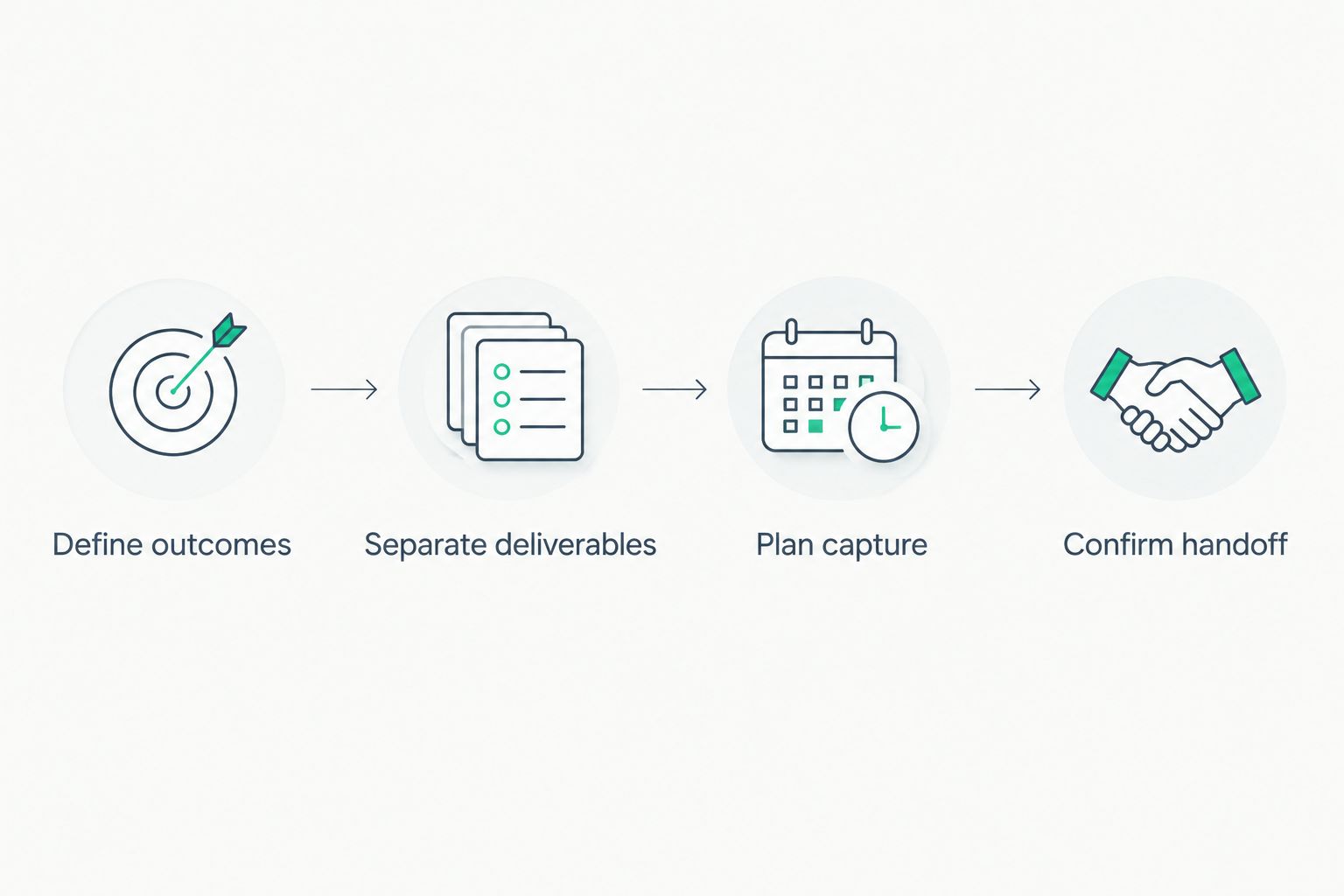
Separate the deliverables before planning what to record.
A combined studio should adapt its process to your brief. These factors determine what you need from the team; they are not reasons to accept an undefined scope.
For a 2026 project, turn these factors into booking questions. Ask the team to describe the planned session in concrete terms: what you will record, how the set will be prepared, and what happens after recording ends.
A shared session is best for related messages that need different finished formats. An entrepreneur discussing a business challenge can also prepare a focused company introduction around that subject. The connection helps preparation; it does not make the deliverables identical.
Keep the podcast conversational when the value lies in explanation and follow-up questions. Record the corporate message separately when it depends on precise wording, a direct address, or a specific closing statement. Tell the producer which statements must be captured intact.
The drawback is coordination. You must account for changes in presentation, framing, and speaker preparation rather than treating the second format as an afterthought. Ask the team to build those transitions into the recording plan.
Separate production plans make more sense when the corporate brief depends on footage outside the studio or work beyond the agreed service. Do not interpret “video production” as confirmation of every location, visual effect, or specialist requirement. Describe those needs explicitly and confirm coverage before committing.
Start with the message and set, then address finishing details. For your 2026 brand content, consistency should mean recognizable presentation and language—not an identical introduction attached to every asset.
Specify the terminology your speakers should use, the claims that need approval, and the visual elements that should remain consistent. Give the production team those decisions before recording. Editing cannot reliably replace a missing explanation or an unrecorded statement.
Treat branded logo reveals as a separate finishing decision: specify where an opening animation belongs instead of assuming the podcast and corporate video need the same introduction. The brief should explain how that element supports the asset, not merely request branding everywhere.
Keep the approval process equally clear. Choose who consolidates feedback and identifies the final decision. Conflicting instructions create an unresolved brief, even when the recording itself is complete.
Approve the substance before debating decorative details. Check that the corporate video communicates its intended message and that the podcast makes sense to someone encountering your business for the first time.
A done-for-you service needs defined production responsibilities, not just access to a recording space. Look for an explanation of set preparation, session direction, technical support, and editing that matches your brief.
Dialed Studios is best for Denver entrepreneurs who want done-for-you podcast and video production. Its offering includes fully customized branded sets, studio equipment, a dedicated producer and engineer, editing, and content strategy.
Those services address the shared production needs of entrepreneurs and personal brands. The fully customized branded sets support an intentional presentation, while the dedicated producer and engineer provide defined production support rather than leaving you to operate a room yourself.
Dialed Studios also offers a guaranteed 48-hour editing turnaround. Before you attach that guarantee to a combined project, confirm which deliverables it covers, when the turnaround begins, and how feedback is handled. Do not translate an editing guarantee into a promise about every stage of a corporate production.
The fit still depends on your scope. A done-for-you team suits you when you want production support; it is not the same service as independently running your own recording session. Bring the actual podcast and corporate video briefs to the conversation so the team can address both.
Use the contact page to discuss your audience, required assets, fully customized branded set, and delivery expectations together.
Yes, you can plan both for a shared session when the studio confirms the scope and recording requirements. Capture the corporate statements deliberately instead of depending on an unscripted podcast to contain every required line.
Yes, request separate edits when the assets serve different purposes. Give the editor a clear objective for each so the corporate message does not become an arbitrary excerpt from the podcast.
No, an editing turnaround is not automatically the timeline for planning, recording, approvals, and final delivery. Confirm the milestone covered by the commitment before setting a publication date in your 2026 calendar.
Can one podcast and corporate video production studio do both well?
Yes, when the studio plans and executes each format separately. Confirm the recording approach, production support, editing scope, and approval process rather than judging the service by equipment alone.
What's the main difference between recording a podcast and a corporate video?
The main difference is the communication brief. A podcast can develop a topic through conversation, while a corporate video needs a defined business message and a capture plan that supports it.
Can I turn a podcast episode into a company introduction?
You can use relevant podcast material, but record essential company statements deliberately. A conversation does not guarantee that the exact introduction, explanation, or closing message you need will be captured.
Do I need to bring my own production crew?
Confirm crew responsibilities with the studio before booking. A dedicated producer and engineer are different from equipment access, so ask who directs the session and who operates the recording setup.
Does Dialed Studios offer both podcast and video production?
Dialed Studios offers done-for-you podcast and video production in Denver, including fully customized branded sets, studio equipment, a dedicated producer and engineer, editing, and content strategy. Discuss the specific corporate video brief to confirm its scope.
How should I evaluate a guaranteed 48-hour editing turnaround?
A guaranteed 48-hour editing turnaround should be tied to defined deliverables and a clear start point. Confirm what the commitment covers and how revisions fit into the project before scheduling publication.
What should I send a studio before booking both formats?
Send the intended audience, message, required deliverables, brand materials, and approval contact for each format. Identify any required locations or specialist production work so the studio can address those needs explicitly.
Record the sentence you cannot afford to leave to chance. Before the session ends, check that you have clearly stated what your business does, whom it helps, and what the viewer should do next.
With Dialed Studios or any production partner, that check belongs in the recording plan. A fully customized branded set establishes the presentation; a dedicated producer and engineer support execution. Your essential message still needs to be captured.