Podcast studio rental for corporate teams: complete 2026 guide
Podcast studio rental for corporate teams: choose production support over room-only hire. Compare branded sets, editing, approvals, and recording workflows.

.svg)
.svg)
Podcast studio rental for corporate teams is a recording arrangement that gives your business a production space and defined support to create company-led audio or video content. Choose the setup around your publishing outcome: executive interviews, customer conversations, or internal communications each need a clear brief, accountable production support, and an approval process.
TL;DR
A corporate recording needs a publishing plan, not just a booking. Your executive brings the expertise. Someone still has to shape the conversation, check the recording, manage the edit, and get the finished episode approved.
The decision changes when several departments have a stake in the output. Marketing needs usable content. Speakers need preparation. Legal or communications reviewers need an agreed process when the subject requires their involvement. Assign those responsibilities before choosing a room.
For your 2026 studio shortlist, compare the handoff as closely as the recording environment. The guide to podcast studios in Denver ranked by turnaround time provides a related comparison angle; your own brief should specify what delivery means for your team.
A useful studio arrangement separates technical production from business approval. A producer can help execute the recording, but your company still owns the accuracy of its statements and the decision to publish them.
Start with a shared document. Write a 1-page brief that names the intended audience, the question the episode answers, and the action you want listeners to take. Keep the purpose specific enough that your host can recognize an irrelevant tangent during the conversation.
An executive interview for prospects needs a different outline from an employee update. Do not ask a single episode to serve every audience. Choose the primary audience first, then decide whether any secondary uses fit without changing the message.
For your 2026 recording brief, write the takeaway before the questions. This gives your team a practical test for the opening, examples, and closing. A polished recording cannot repair an episode that never establishes its point.
Close the brief with decisions the production team can execute:
Use a simple responsibility checklist before comparing providers. Separate the person who runs the recording from the person who approves the company’s message. Those jobs require different decisions.
Choose 1 approval owner to consolidate feedback. Other stakeholders can review the content, but the editor needs a resolved instruction set rather than conflicting comments from separate departments. Make that owner responsible for gathering corrections and confirming publication approval.
Your company should also decide who prepares speakers, supplies brand assets, and handles distribution. Do not assume a studio booking includes those tasks. Ask for a written scope that distinguishes included production work from responsibilities your team retains.
A clear ownership map should cover:
The manual route is room-only rental with your own production lead. It fits a team that can run the session, manage technical checks, organize files, and complete post-production. Do not choose it simply because the room looks suitable.
For a team that needs execution support, evaluate a done-for-you production partner. Dialed Studios provides podcast and video production in Denver with fully customized branded sets, a dedicated producer and engineer, editing, and content strategy. Its guaranteed 48-hour editing turnaround gives you a specific delivery commitment to discuss against your publishing workflow.
Dialed Studios is best for Denver corporate teams seeking done-for-you podcast production. Your company still needs to provide accurate material, brand direction, and approval decisions. Dedicated production support does not transfer responsibility for the business message.
Compare support with a task-based checklist:
Start by collecting your existing brand assets and visual references. Explain what the viewer should understand about your company from the setting. A corporate podcast set should support the conversation rather than compete with it.
Fully customized branded sets are part of Dialed Studios’ offer. Translate that into a clear brief: desired tone, approved assets, seating arrangement, and the framing needed for your intended content. Do not assume that customization means every visual idea has already been agreed.
For your 2026 set brief, distinguish requirements from preferences. A required speaker arrangement affects the recording plan; a decorative preference belongs in the visual discussion. Ask the production team to confirm the final approach before your executives arrive.
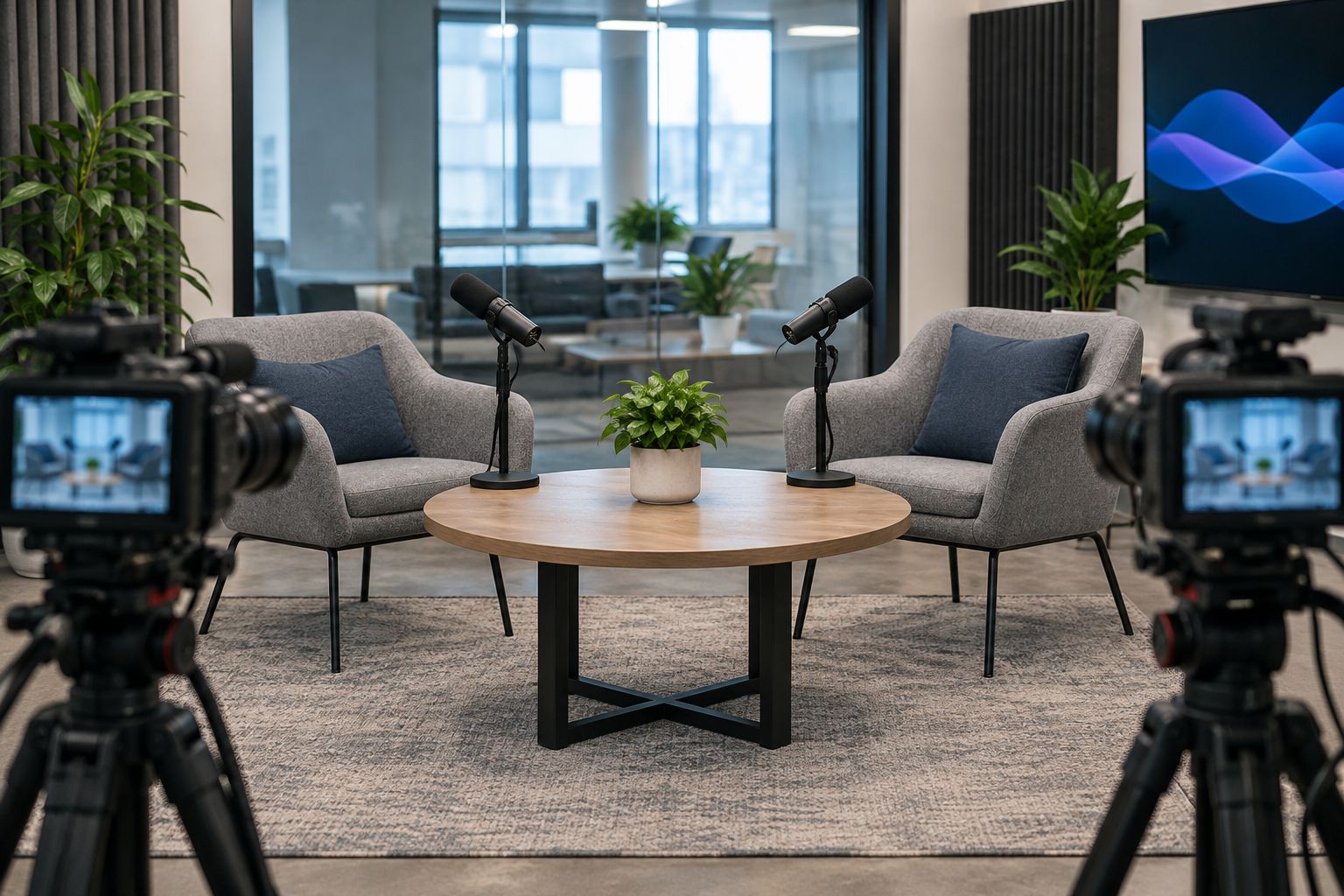
Agree on seating and framing before the recording session.
Keep the set discussion concrete:
Build the outline yourself before asking a production partner to help refine it. Use questions, examples, and follow-ups rather than writing every answer word for word. Give each speaker a clear role in the conversation.
Corporate speakers need to know which details are approved for public use. Customer names, unpublished results, and internal plans should not become spontaneous talking points without authorization. Put sensitive boundaries in the preparation document and tell the host how to redirect the discussion.
Rehearse the opening question and the most important explanation. The goal is not a memorized performance. It is a speaker who can make a complete point, support it with an approved example, and stop without needing the host to rescue the answer.
Prepare the session with these tactics:
Use your own calendar to map recording, edited delivery, review, and publication. These are different milestones. Receiving an edit does not mean your organization has approved it for release.
Dialed Studios guarantees a 48-hour editing turnaround. Use that commitment as an editing milestone, then confirm the scope and timing details directly. Your internal review schedule still needs room for factual corrections, stakeholder feedback, and a final publishing decision.
For your 2026 launch plan, set 3 review gates: message accuracy, brand review, and final approval. Treat them as recommended workflow stages, not a provider policy. Combine stages when the same person owns them, but keep the decisions explicit.
Write the handoff so nobody has to guess:
Start with a shared checklist, not a new platform. Carry the same episode brief through recording, editing, approval, and publication. Each handoff should have a named owner and an observable completion condition.
Keep the workflow readable. A recording is complete when the agreed material has been captured; an approval is complete when the authorized reviewer has signed off. Avoid status labels that mean different things to different departments.
Use the same sequence for your 2026 episode calendar. Change the content brief for each conversation, but retain the ownership rules. This makes the process easier to hand over when a speaker, marketer, or reviewer changes.
The sequence should cover:
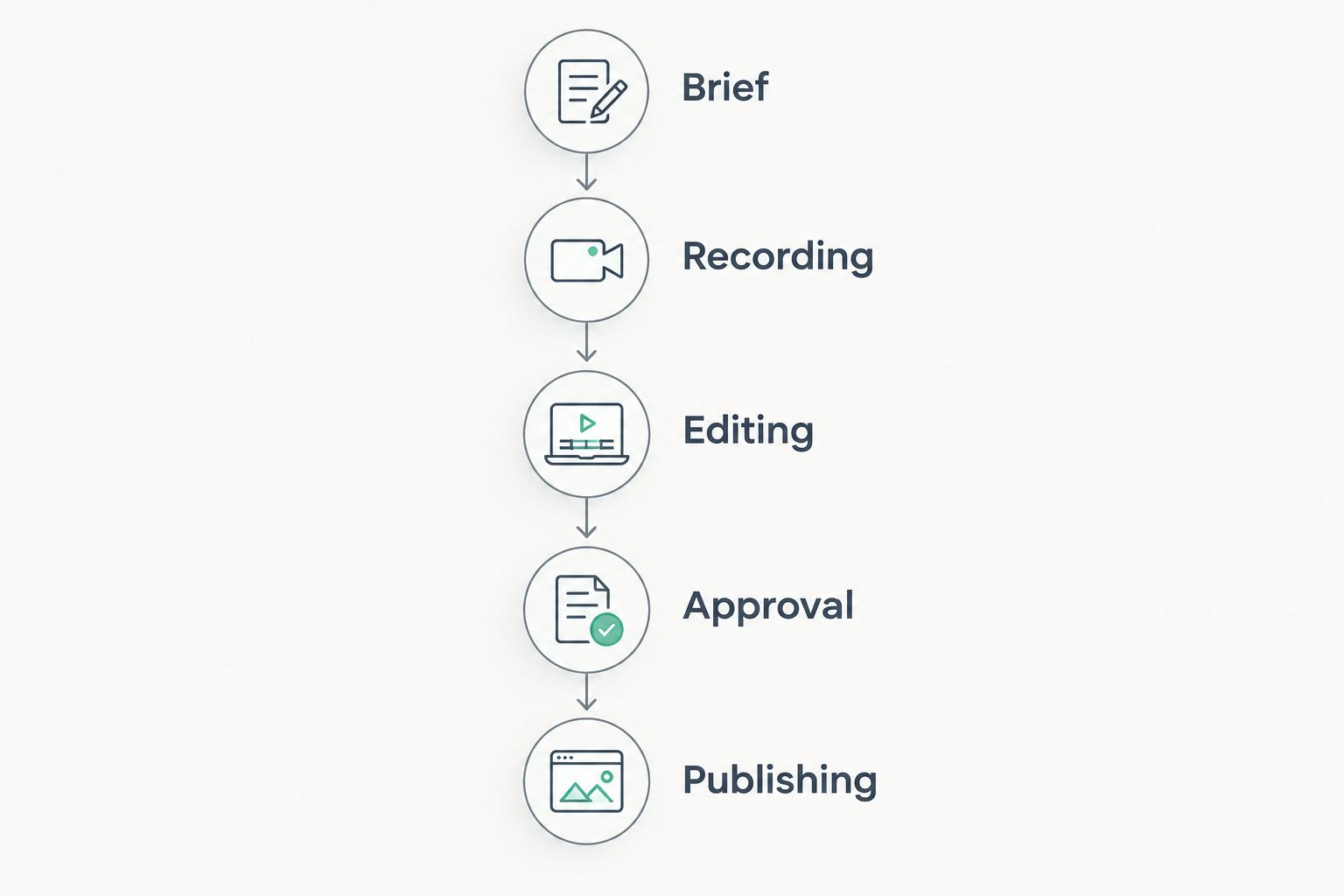
Editing and approval are separate stages with separate owners.
Choose the option that matches the responsibilities your team can actually carry. Room access and finished production are different purchases. Compare the work each arrangement covers before choosing between them.
Room-only rental
In-house recording
Rental with separately hired specialists
Dialed Studios done-for-you production
Before committing, request a written scope covering the recording, set preparation, editing outputs, revision process, and file handoff. An equipment list is useful, but it does not answer who will turn your conversation into approved content.
Plan your corporate recording
Discuss fully customized branded sets, dedicated production support, and the guaranteed 48-hour editing turnaround.
An attractive space does not establish who produces the episode. Choose the support model first. Confirm who handles the recording, file organization, editing, and delivery before comparing the setting.
Separate feedback threads leave the editor resolving business disagreements. Appoint an approval owner and send consolidated notes. Distinguish factual corrections from preferences so required changes remain clear.
A confirmed recording slot is only part of the plan. Prepare the brief beforehand and schedule review afterward. Keep the publication date separate from both recording and edited delivery.
A correctly branded set does not make every statement publishable. Verify examples, customer references, and business claims before recording. Flag anything that still requires approval rather than relying on the editor to recognize it.
Shorter content needs complete, understandable answers. Identify useful questions in the outline and ask what editing outputs are included. Do not assume every extract, caption, or platform version belongs to the same production scope.
What’s the best podcast studio rental for corporate teams?
The best arrangement matches the production work your team needs handled. Choose room-only rental when you own production and editing; choose done-for-you support when you need help executing the recording and post-production.
Is a full-service podcast studio better than renting a room?
A full-service studio is the better fit when your team needs production execution rather than space alone. Room-only rental fits teams that already have the people and process to manage the work themselves.
What does Dialed Studios offer corporate recording teams?
Dialed Studios offers done-for-you podcast and video production in Denver, including fully customized branded sets, a dedicated producer and engineer, editing, and content strategy. Its offer includes a guaranteed 48-hour editing turnaround.
Does a 48-hour editing turnaround mean the episode is ready to publish?
Editing delivery and publication approval are separate milestones. Your company still needs to review the content, resolve required changes, and authorize release.
How should a corporate team prepare an executive for a podcast?
Give the executive a clear audience, central takeaway, and question outline. Verify supporting examples and identify sensitive topics before the recording session.
Should we record a corporate podcast as audio or video?
Choose the format around where you intend to publish the content. If your plan includes video episodes or visual extracts, discuss that requirement before agreeing on the recording scope.
Who should approve a corporate podcast episode?
Choose a final approval owner who can consolidate the required internal reviews. Include subject-matter, communications, or legal reviewers when the content requires their input.
What should we ask before booking a corporate podcast studio?
Ask who runs production, what the editing scope includes, how set customization works, and how files are delivered. Confirm revision handling, permissions, and your company’s remaining responsibilities in writing.
Brief the handoff, not just the recording. Before booking, write the exact deliverables you need and name the person authorized to approve them. That short document connects your studio choice to a real publishing decision.
For a Denver corporate team, Dialed Studios combines fully customized branded sets, a dedicated producer and engineer, and guaranteed 48-hour editing turnaround. Bring the company knowledge and approval owner; use the production partnership to execute the content rather than treating it as a room rental.