How much more does a video podcast cost than audio-only?
Video podcast vs audio only cost depends on production scope. Compare filming, editing, branded sets, and deliverables before you choose a format.



Video podcasting adds visual production to the audio workflow, but there is no fixed surcharge that applies to every show. The difference depends on what you ask the team to film, edit, and deliver—not simply whether a camera is running. Compare finished episodes and your own production responsibilities, because a recording-only quote and a publication-ready quote cover different work.
TL;DR
For your 2026 production plan, separate equipment access from production support. Dialed Studios offers done-for-you podcast and video production in Denver, including fully customized branded sets, a dedicated producer and engineer, and a guaranteed 48-hour editing turnaround.
The additional cost is the difference between matched audio-only and video production quotes. Keep the conversation length, recording schedule, audio editing requirements, and delivery expectations consistent. Then isolate the visual work.
A camera does not replace microphones, audio monitoring, or sound editing. Video adds a picture workflow to the recording, so the useful comparison is what changes between the finished audio episode and the finished video episode.
Recording
Environment
Editing
Presentation
Delivery
Best for
Main limitation
For a 2026 quote comparison, ask each provider to describe the same finished result. Do not treat an equipment list as a delivery agreement. A recording file still needs whatever editing, review, and export work your publishing plan requires.
Your real decision is not whether video looks more impressive. It is whether the additional production work supports content you intend to publish.
An entrepreneur who wants an edited conversation for listeners has a different brief from a personal brand that wants a full video episode and separate social edits. Both can start with the same interview. They do not end with the same deliverables.
Choose the distribution plan before choosing the production scope. Otherwise, you risk commissioning footage without deciding who will turn it into usable content. You also risk rejecting video based on a quote that includes work your audio-only quote leaves out.
Audio-only is the better fit when your conversation stands on its own and you do not have a defined use for footage. You can focus the production brief on recording quality, dialogue editing, and the finished listening experience.
Its strength is a narrower production scope. You do not need to approve framing, on-camera appearance, visual continuity, or picture edits for an audio-only release. That removes decisions, not the need for careful production.
The limitation is straightforward: an audio recording contains no original video footage. If your content depends on showing a physical process, facial expression, or visual example, listeners need a spoken explanation instead.
Choose audio-only when:
Do not choose audio-only solely because the initial quote looks smaller. Confirm that editing and final delivery match the work included in the video alternative.
Video is the better fit when viewers need to see the conversation or when your content plan explicitly includes filmed episodes. It captures the speaker and setting alongside the spoken material.
That gives your production brief another dimension. Fully customized branded sets can make the recording environment part of your presentation, while picture editing determines what viewers see throughout the conversation.
The trade-off is additional visual responsibility. Someone must make decisions about framing, lighting, set preparation, picture edits, and final video approval. A production team can handle technical work, but you still need to communicate the intended result.
Choose video when:
Recording video is not the same as commissioning a complete video content package. Ask whether the proposal ends at captured footage, an edited episode, or additional edited assets. Treat those as separate scope decisions.
The video podcast vs audio only cost comparison becomes useful when you identify the work behind each proposal. Use these factors to explain the difference rather than applying an assumed industry multiplier.
These factors also explain why a room-rental proposal and a done-for-you production proposal are not interchangeable. The first comparison is responsibility. The financial comparison follows only after you know who does each task.
For your 2026 shortlist, send the same brief to every provider. Use the following sequence to keep the comparison focused on the episode you need, not the presentation of the proposal.
Describe the format, participants, intended recording length, and publishing destination. State whether you need audio-only, a filmed conversation, or both finished formats.
Be explicit about the purpose. A conversation designed for listeners needs a different visual brief from an episode built around demonstrations. Do not leave the production team to infer your intended audience experience.
Request separate descriptions of recording, editing, and delivery. Ask who supplies equipment, prepares the set, manages the session, and finishes the files.
If equipment is your main uncertainty, read the guide to whether podcast studios provide equipment. Owning a microphone and having a staffed production workflow are different arrangements.
List the files you expect to receive. Distinguish a full-length episode from separate social edits, and specify whether an audio version must accompany the video.
Then confirm the review process and turnaround commitment in writing. Ask when the delivery clock starts and which deliverables the commitment covers. Do not assume an editing guarantee covers every additional asset you request.
Name the person responsible for approving the episode, sending feedback, and publishing the files. Also identify any work that remains with your team after delivery.
A useful quote makes unfinished work visible. If a proposal leaves editing, exports, or publishing preparation with you, account for those responsibilities before comparing it with a done-for-you service.
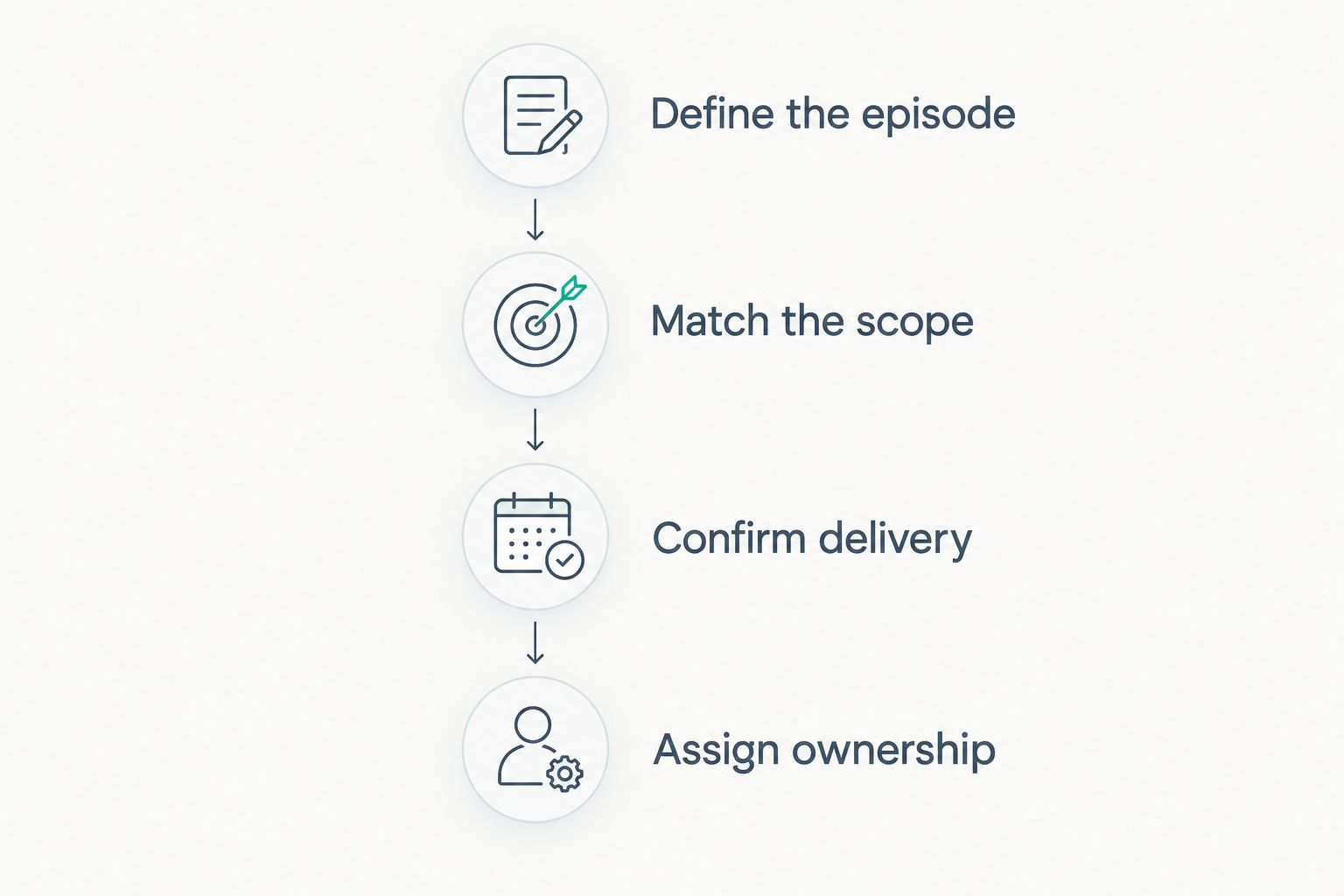
Match responsibilities and finished deliverables before comparing proposals.
A room is a place to record. A production partner also takes responsibility for specified production work. That distinction matters when you want to focus on the conversation rather than operate the session.
Dialed Studios is best for entrepreneurs and personal brands seeking done-for-you podcast and video production in Denver. The service includes fully customized branded sets, a dedicated producer and engineer, editing, and content strategy, with a guaranteed 48-hour editing turnaround.
The benefit is defined production support rather than equipment access alone. The limitation is fit: if you want to operate your own equipment and manage every edit, the done-for-you model does not match that brief. Compare the service against the responsibilities you actually want to hand off.
For a 2026 production brief, discuss your intended episode formats and delivery needs before choosing the recording setup. Ask how the guaranteed turnaround applies to your requested work, and make the agreed deliverables explicit.
Plan your podcast production
Discuss customized branded sets, dedicated production support, and your audio or video deliverables.
Yes, a video recording can supply the source audio for a separate audio episode. Request the finished audio export explicitly, including any dialogue editing or finishing you need.
A video file and an audio-ready episode are not identical deliverables. Visual references also need attention: a listener cannot see the object you point to or read the material shown on camera.
No, recording video does not automatically include edited social clips. Clips require their own selection and editing brief, so name them separately when requesting a proposal.
If you need both full episodes and shorter edits, define the purpose of each. Do not ask a provider to quote an unspecified content package and then compare it against episode-only editing.
Start with audio when your current publishing plan is audio-only. Add video when you have a clear destination for footage and a process for approving the finished visuals.
The reverse also matters: if video is already part of your launch plan, quote it from the start. Rebuilding the brief after recording does not create footage that was never captured.
How much more does a video podcast cost than audio-only?
The difference depends on the additional visual production and deliverables in your quote. Compare matching recording, audio editing, and delivery scopes before isolating the video work.
What's the best format for a business podcast?
Audio-only is best for a listening-first publishing plan; video is best when you have a defined use for filmed episodes. Choose based on the content you intend to publish, not the equipment alone.
Is a video podcast automatically better for growth?
No, filming an episode does not establish that it will grow your audience. Choose video because it serves your content and distribution plan, not because it promises an unsupported result.
Do I need a customized set for an audio-only podcast?
A customized visual set is not required for an audio-only release. Focus the brief on recording conditions, microphones, production support, and audio editing.
Does a podcast studio rental include an engineer?
Do not assume an engineer is included in room rental. Ask the provider to identify the recording support included and the tasks you must handle yourself.
What does Dialed Studios offer beyond a recording room?
Dialed Studios offers done-for-you podcast and video production with fully customized branded sets, a dedicated producer and engineer, editing, and content strategy. Its guaranteed 48-hour editing turnaround is another specific commitment to discuss alongside your deliverables.
What should I put in a podcast production brief in 2026?
Your 2026 brief should specify the episode format, recording requirements, editing scope, finished files, review process, and delivery expectations. Assign responsibility for anything that remains after the production team delivers.
The format decision starts before recording, not in the edit. If you want audio listeners and video viewers to understand the same episode, ask speakers to describe essential visual references aloud.
That simple instruction belongs in the recording brief. An editor can select footage and refine a conversation, but an audio export cannot show listeners something the speaker never describes.