How much does it cost to soundproof a room for podcasting?
The cost to soundproof a room for podcasting depends on scope. Separate echo treatment from noise isolation, then compare a home build with studio production.



The cost to soundproof a room for podcasting depends on whether you need to reduce echo, stop outside noise, or rebuild the room for sound isolation. Those are different projects, and a useful 2026 estimate must separate them. Your room budget also excludes microphones, recording equipment, editing, and the time you spend producing each episode.
TL;DR
Budget for the problem you can hear, not a generic soundproofing package. A reflective office, a room beside traffic, and a room sharing a wall with another business require different work. Asking for the same package across all three produces estimates that are not comparable.
Use this scope breakdown when requesting a 2026 assessment. Each approach solves a different problem; none substitutes for every other approach.
Acoustic treatment
Targeted noise control
Structural sound isolation
Full-service studio production
Before buying materials, compare buying podcast equipment with using a studio. A room project only addresses part of the work required to publish a podcast.
A room can look finished and still record poorly. Decorative panels do not establish that the room blocks traffic, neighboring conversations, or ventilation noise. Equally, a quiet room can produce distracting reflections without needing structural reconstruction.
For your 2026 podcast plan, define the recording problem before choosing the solution. You need a usable voice recording, not a collection of materials marketed with the same soundproofing label.
The distinction also protects your production schedule. If you solve reflections but leave an intrusive noise source untouched, you still have to schedule around it, change locations, or address the remaining sound path.
Acoustic treatment changes how sound behaves inside a space. Absorptive materials reduce reflected sound, helping you capture speech with less room reverberation. This is the relevant starting point when your recording sounds hollow or echoey despite a quiet background.
Best for: a room that is already quiet but makes voices sound distant or reflective. Start with a microphone recording at the intended speaking position. Listen for the room around the voice rather than judging the space by its appearance.
Ask a provider to explain where absorption belongs and why. Treatment placement matters because the microphone captures both your direct voice and reflected sound. Covering convenient wall areas without assessing the recording position is not a clear acoustic plan.
The limitation is straightforward: absorption is not isolation. Panels inside the room do not replace the mass, airtightness, and construction details needed to reduce sound transmission through the building.
Targeted work starts with an identifiable source and route. Examples include sound entering around a door, through a window assembly, or from equipment operating inside the room. The assessment should connect the proposed work to the sound you actually hear.
Best for: a room with a clearly identified noise problem rather than widespread transmission. Document when the noise occurs and whether it changes when doors close or equipment switches off. Give that information to the person assessing the room.
Ask what the proposed intervention addresses and what remains outside its scope. Treating a door gap does not establish that the door, adjoining wall, and ventilation paths provide adequate isolation.
Do not block ventilation or alter safety-critical building components to make a recording quieter. A usable podcast room needs safe airflow and access as well as acceptable sound.
Structural sound isolation addresses transmission between spaces. Depending on the assessment, the design can involve walls, ceilings, floors, doors, windows, penetrations, and ventilation. These elements need to work together.
Best for: persistent external or neighboring noise that simpler changes do not resolve. Get the building assessed before committing to construction. A material list alone does not describe how the completed room will perform.
Sound can travel around an improved surface through connected structures or openings. Ask the designer to identify these indirect routes, often called flanking paths, and explain how the proposal handles them.
The trade-off is permanence and complexity. Construction changes the room itself, and rented premises introduce permission constraints. For a 2026 build, settle the permitted scope and intended use before approving work or choosing finishes.
Room size matters, but it does not define the project by itself. The source, path, and recording requirements determine what the design must address.
Ask every provider to address the same factors. Otherwise, one proposal can appear simpler because it excludes work another proposal includes.
A useful estimate connects a diagnosed problem to a defined outcome. Follow this sequence before requesting proposals, and use the same brief for each provider.
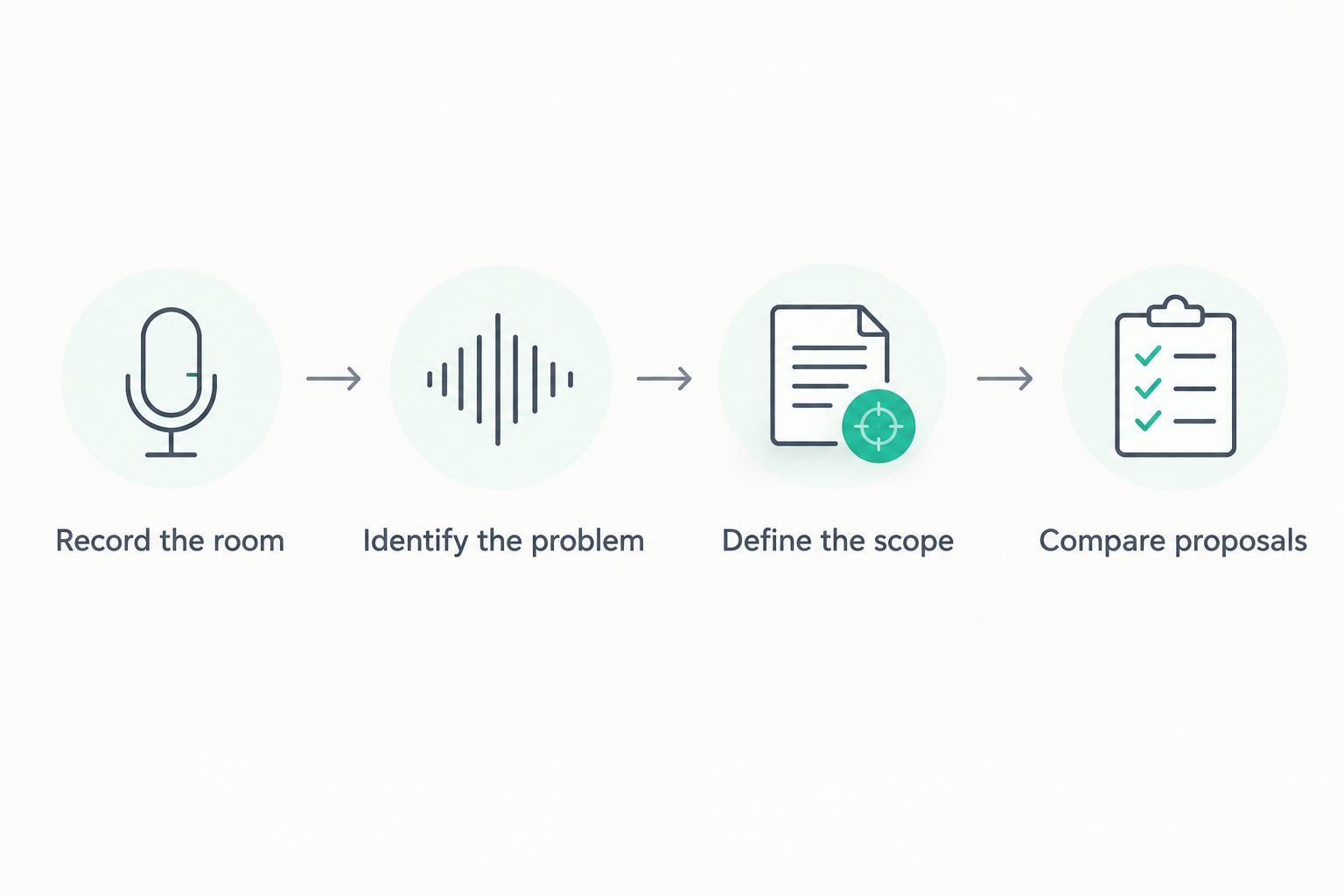
Identify the recording problem before choosing materials or approving work.
Your brief should describe normal recording conditions. Include the expected occupants, furniture, equipment, and nearby activity. An empty room assessment does not describe every condition present during an actual episode.
Request a written explanation of exclusions. You need to know whether finishing work, electrical changes, ventilation design, and post-installation assessment belong to the proposal or require separate arrangements.
Soundproofing is a room project. Podcast production continues after the room is ready. Keep those responsibilities separate so you do not mistake a completed build for a completed production system.
Your planning checklist should include recording equipment, setup, session operation, file handling, editing, and preparation for publication. For video, include the set, lighting, framing, and the space needed to operate them.
Also assign responsibility. If you own the room but no one monitors the recording, manages files, or completes edits, those jobs remain yours. Equipment ownership does not assign production work to anyone else.
For your 2026 decision, compare complete workflows. A home setup offers direct control and avoids travel, but leaves you responsible for the room and production process. An external team changes those responsibilities, while introducing scheduling and travel requirements.
Dialedstudios is best for Denver entrepreneurs and personal brands who want done-for-you podcast production instead of managing a recording room. The service includes fully customized branded sets, studio equipment, a dedicated producer and engineer, editing, and content strategy.
The guaranteed 48-hour editing turnaround addresses work that soundproofing does not: turning recorded material into edited content. That distinction matters if your main obstacle is producing consistently rather than accessing a room.
Dialedstudios acts as a creative partner and production team, not simply a room rental. Fully customized branded sets support your on-camera presentation, while the dedicated producer and engineer provide production support during recording.
The trade-off is location and coordination. You need to attend the Denver studio and arrange sessions with the team. A home room remains the more direct fit when recording at home is itself a firm requirement.
Choose between those operating models before committing to construction. Neither a finished room nor outsourced production is automatically the right answer; the deciding question is which responsibilities you want to own.
Plan your podcast production
Discuss customized branded sets, dedicated production support, and guaranteed 48-hour editing.
Acoustic panels control reflections inside your podcast room; they do not substitute for sound-isolating construction. Use panels to address reverberation, and assess external noise separately before deciding that the room needs building work.
Building a home podcast room is better when permanent access and control are your priorities. Full-service studio production is better when you want recording and editing support; compare the entire workflow, not just the space.
Editing does not replace a quiet room. Noise reduction has limits, and competing voices, distortion, or strong reverberation can compromise the recording; address those problems before relying on post-production.
What's the first thing I should do before soundproofing a podcast room?
Record speech and background sound in the room before buying materials. Listen for reflections, external noise, and equipment noise so you can request work that addresses the actual problem.
What's the difference between acoustic treatment and soundproofing?
Acoustic treatment controls sound reflections inside a room, while soundproofing aims to reduce sound transmission between spaces. A room can need one, the other, or both.
Can I use a spare bedroom for podcast recording?
A spare bedroom can work if its noise and acoustic conditions suit your recording needs. Test it during your intended recording times before committing to equipment placement or permanent changes.
Will a better microphone fix an echoey room?
A better microphone does not remove the room's reflections. Microphone placement and room treatment still matter because the microphone captures sound reaching it from the room.
Should I soundproof a rented office for my podcast?
Confirm what your lease and building rules permit before planning permanent soundproofing. Assess the noise problem first, then compare permitted changes with recording elsewhere.
Does a podcast room budget include editing?
A room construction budget does not automatically include podcast editing. Treat recording, editing, and publication preparation as separate responsibilities unless your production agreement expressly includes them.
What does Dialedstudios offer instead of building my own room?
Dialedstudios offers done-for-you podcast and video production in Denver with fully customized branded sets, studio equipment, a dedicated producer and engineer, editing, and content strategy. Its guaranteed 48-hour editing turnaround addresses post-production as well as recording.
Test the room at the time you intend to record. A room that sounds quiet during a walkthrough can behave differently when neighboring businesses, traffic, or building equipment are active. That simple check gives your room assessment a relevant starting point before you approve permanent work.