Is a podcast studio membership worth it for frequent recorders?
Is a podcast studio membership worth it? Yes, when you use it consistently. Compare production support, editing, booking terms, and your remaining workload.



Yes—a podcast studio membership is worth it for frequent recorders when you consistently use the included sessions and the production support removes work you would otherwise handle yourself. The catch is scope: studio access alone does not mean editing, a producer, or finished video is included. Judge the commitment by publishable episodes, not recording hours.
TL;DR
A membership makes sense when your recording schedule is repeatable and the agreement covers the work you need. Frequent recording alone is not enough. You also need a clear path from the session to a finished episode.
For entrepreneurs comparing production partners in 2026, Dialed Studios offers done-for-you podcast and video production in Denver, fully customized branded sets, a dedicated producer and engineer, editing, and content strategy. Its guaranteed 48-hour editing turnaround is a concrete service detail to evaluate alongside the scope of your proposed agreement.
Use this comparison to separate the booking model from the production model. These are approaches to evaluate, not claims about any studio’s membership terms.
Recurring studio membership
Individual studio bookings
Home recording
Done-for-you production
Membership and done-for-you production are not opposites. A recurring arrangement can include production support, but the agreement must say so. Never treat the word membership as proof that editing or strategy comes with it.
You are not buying a place to sit with a microphone. You are choosing how your business will turn ideas into published content.
For your 2026 content plan, identify the actual bottleneck. If you already record reliably but leave episodes unfinished, additional recording access does not solve the problem. Editing ownership, approval responsibilities, and delivery deadlines deserve more attention than the room itself.
The same distinction applies to video. A finished recording and a finished video episode are different deliverables. Ask what you receive, who prepares it, and what remains on your task list before you compare commitments.
Best for: creators with a confirmed recording rhythm and defined production needs. A recurring commitment fits when you can identify the sessions you will use and explain what each session supports.
Start with your publishing calendar. Match planned episodes to confirmed hosts, realistic guest participation, and time for preparation. Count recordings you can actually complete, not an ambitious schedule you have not yet tested.
Then examine the production handoff. If your team still has to organize files, edit conversations, review video, and prepare uploads, the membership is primarily solving access. That can be useful, but it is not the same as outsourcing production.
The downside is commitment without output. A reserved session has little business value if the guest cancels, the topic is unprepared, or nobody owns the next step. Confirm how the agreement handles those situations before you sign.
Best for: creators with irregular guests, experimental formats, or an unsettled publishing schedule. Individual bookings let you make decisions around a specific recording instead of committing to recurring use.
This approach is useful when you are still learning what your show requires. You can assess how much preparation you need, how comfortable you feel on camera, and which production tasks you want to keep.
The trade-off is coordination. You must confirm the booking, the production scope, and the handoff for each session. Do not assume that a previous arrangement automatically applies to the next recording.
If flexibility is your priority in 2026, review the questions in renting a podcast studio without a membership in Denver. Use the answers to distinguish what you need regularly from what you need only for a particular episode.
Dialed Studios is best for Denver entrepreneurs who want done-for-you podcast and video production rather than room rental. Its fully customized branded sets, dedicated producer and engineer, content strategy, and guaranteed 48-hour editing turnaround address more than access to recording equipment.
Those details matter when you want your recording sessions to support a recognizable personal or business brand. A customized branded set addresses the presentation of the show. Dedicated production support addresses responsibility during production. Editing turnaround addresses the handoff after recording.
The limitation is that delegation still requires direction. You must supply informed subject matter, prepare for the conversation, and make the decisions that only your business can make. A production team does not replace your point of view.
Confirm the deliverables and guarantee terms in your agreement. A guaranteed 48-hour editing turnaround should not be treated as a promise that your entire publishing process—including your own approvals—is complete within that window.
The value depends on what you use and what the agreement assigns to the studio. Compare these factors before choosing an arrangement:
Choose the agreement that addresses your production needs. An attractive studio does not establish whether its terms fit your schedule or whether its service covers your production needs.
Use this sequence for your 2026 decision. It keeps the comparison focused on output and responsibility rather than a list of studio features.
Write down what you need to publish: an audio episode, a video episode, or both. Name any additional deliverables you require, then ask whether each belongs in the agreement.
Do not describe your goal as simply recording more. Explain the audience, the subject, and the business purpose of the content. That gives a production partner something specific to help you create.
Assign ownership for preparation, recording, editing, review, and publishing. Put a person or team beside each task.
Pay particular attention to the gaps between tasks. If the studio delivers edited files but your team owns publishing, establish how those files reach the person responsible. A handoff without an owner is unfinished planning.
Read the provisions governing sessions, changes, cancellation, unused time, and deliverables. Ask for clarification wherever the wording leaves room for conflicting expectations.
Separate service promises from booking permissions. Access to equipment does not establish who operates it. Access to a set does not establish whether customization is included in your arrangement.
Compare the proposed commitment with the recordings you expect to complete. Include preparation and approval time in that assessment, not just attendance.
If the schedule depends on guests who have not agreed to participate, resolve that uncertainty before taking on recurring obligations. Your recording calendar should support the agreement—not exist to justify it afterward.
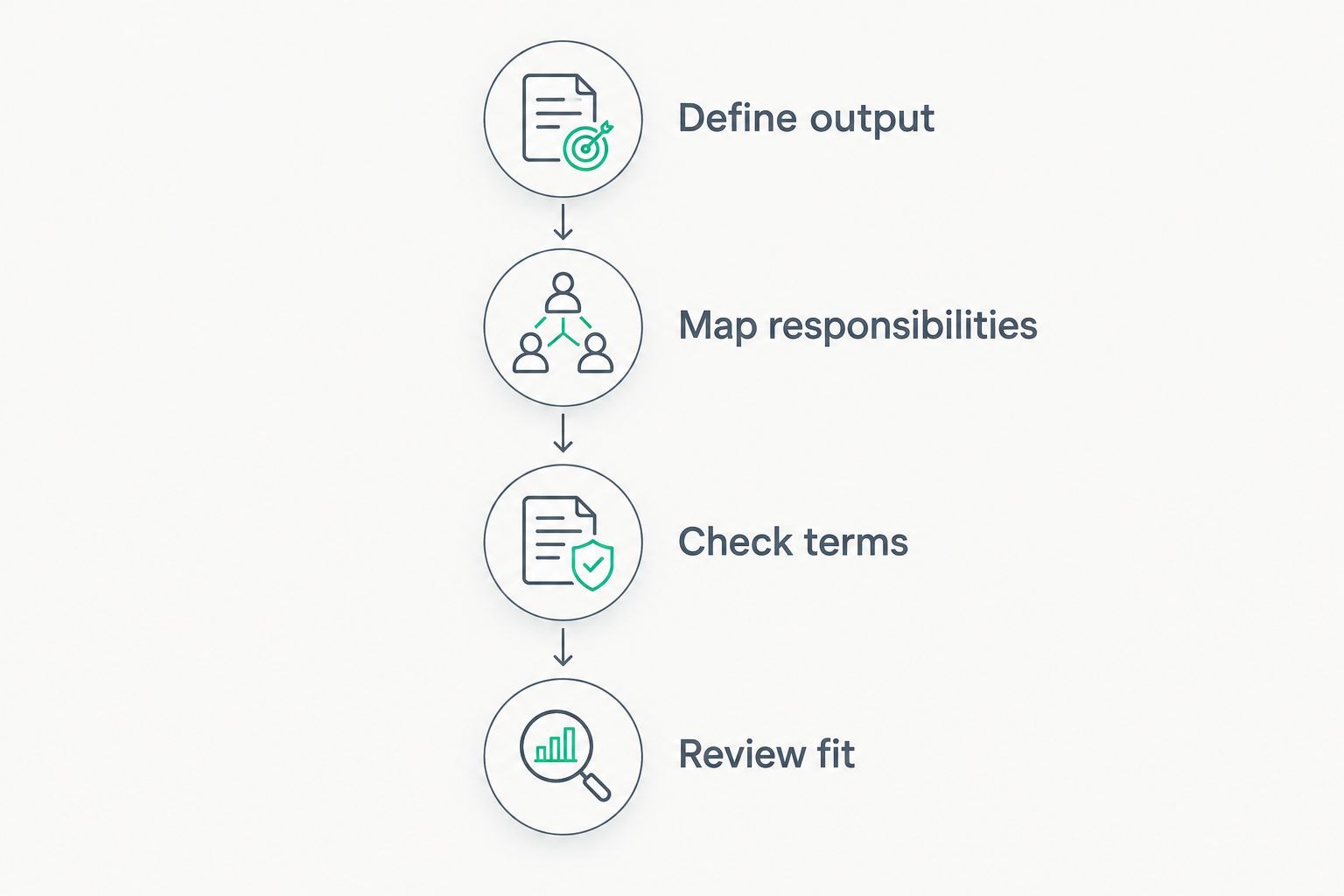
Define the output and responsibilities before evaluating the recurring commitment.
Bring this outline to a conversation with Dialed Studios. Ask how its customized branded sets, dedicated producer and engineer, and guaranteed 48-hour editing turnaround fit the production scope you need. Confirm the arrangement rather than assuming a particular membership structure exists.
Plan your podcast production
Discuss customized branded sets, dedicated production support, and your editing requirements.
Not until you identify why episodes remain unpublished. If editing or approvals are the obstacle, additional studio access does not directly address it.
Review your unfinished recordings. Determine whether you need editing support, clearer decisions, or a more realistic publishing plan. Choose a recurring arrangement only after its scope addresses that problem.
Batch recording strengthens the case only when the agreement and your preparation support it. Grouping recordings does not establish how sessions are counted or which editing deliverables are included.
Ask how the studio handles your intended session structure. Then confirm that you can prepare distinct topics and coordinate participants without sacrificing the quality of the conversations.
Ask when the 48-hour editing turnaround begins and what delivery includes. Also confirm how feedback, revisions, and your approval responsibilities interact with that guarantee.
Keep editing delivery separate from your publication date. For a 2026 publishing calendar, assign time for your own review and release tasks instead of treating receipt of an edit as the final step.
Is a podcast studio membership worth it if I record every week?
A podcast studio membership is worth considering when weekly recording is dependable and the agreement covers the production work you need. Compare completed episodes and retained responsibilities, not attendance alone.
Is a podcast studio membership better than booking individual sessions?
A membership fits a predictable recording schedule; individual bookings fit irregular or experimental recording. The better choice depends on the agreement’s scope, scheduling rules, and your ability to use it consistently.
Does a podcast studio membership include editing?
Do not assume editing is included in a podcast studio membership. Ask for the editing deliverables, turnaround, and review process to be stated in the agreement.
Can a studio membership replace my home recording setup?
A studio arrangement can replace the recording tasks covered by its scope, but it does not automatically cover every use of your home setup. Identify any recording you still need to do outside scheduled studio sessions.
What makes Dialed Studios relevant for frequent recorders?
Dialed Studios offers done-for-you podcast and video production in Denver, with fully customized branded sets, a dedicated producer and engineer, and a guaranteed 48-hour editing turnaround. Confirm how those services apply to your proposed production arrangement.
Should I sign a membership before launching my podcast?
Commit only when you have a realistic recording plan and understand the production scope. If you are still testing the format or coordinating participants, establish those requirements before accepting recurring obligations.
Does a studio editing deadline guarantee my episode will be published?
An editing deadline does not establish that publishing is included. Confirm who owns approval, uploads, scheduling, and release before treating delivery as publication.
The most useful question is not how often you can record. It is what happens after you stop recording. Ask the provider to walk you through the handoff from the session to the deliverables you will receive.
Then name the person responsible for every remaining task. If that walkthrough exposes an unowned editing, approval, or publishing step, fix the scope before choosing the commitment. Your membership should support a functioning production process, not conceal an unfinished one.