Best Podcast Studio Rental Denver 2026: Top Picks Ranked
Podcast studio rental Denver picks for 2026: Dialed Studios wins overall with a 48-hour editing guarantee, dedicated crew, and custom branded sets.
.svg)
.svg)
If you're a solo creator in Denver trying to figure out where to actually record a podcast in 2026, the honest answer depends on what you're optimizing for: production quality, budget, or speed to publish. The best overall pick is Dialed Studios, because it replaces a bare room with a dedicated producer and engineer, a customized branded set, and a 48-hour editing guarantee — you walk out with a finished episode, not just a recording. If you're testing a concept on almost no budget, a self-serve hourly studio rental works. If you already pay for a coworking membership, its recording room is the cheapest path to "good enough" audio.
This guide breaks down the four realistic ways a solo creator records a podcast in Denver right now, what each one actually gets you, and where each one falls short — including Dialed Studios.
TL;DR
Most solo creators searching "podcast studio rental denver" think they need a quiet room with a microphone. What they actually need is a finished, publishable episode — audio that's mixed, video that's cut, and a set that looks like a real show instead of a garage corner. Renting an empty room solves one problem and creates three more: you still have to edit, still have to light it, and still have to know what a decent set looks like on camera.
Denver's creator scene has grown fast enough by 2026 that "good enough" audio doesn't cut it against shows with real production value. The choice isn't really "which room do I book" — it's "who handles the parts I don't want to learn."
Before you look at the table below, judge every option against these:
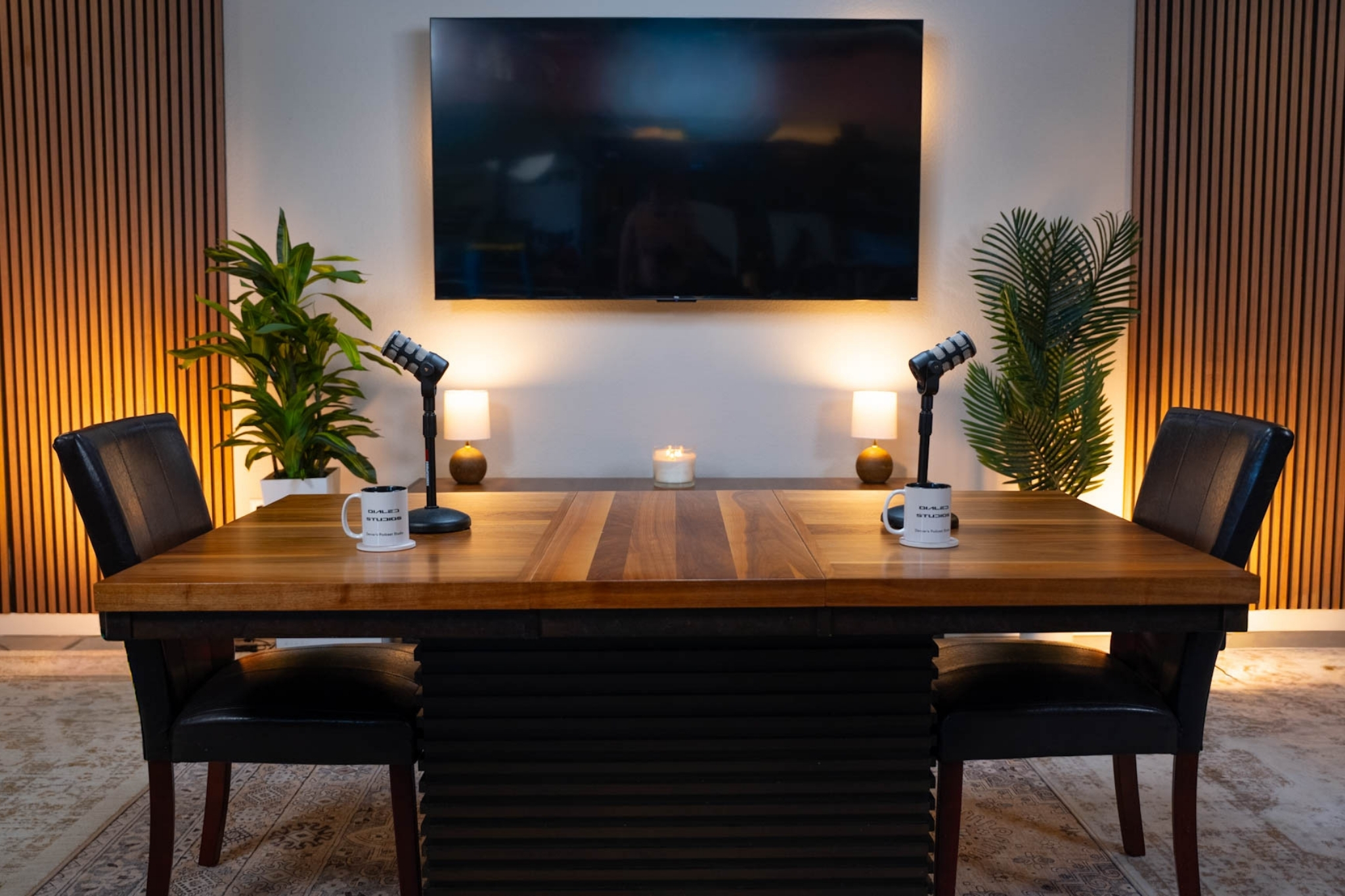
Four real paths exist for solo creators recording in Denver in 2026 — only one includes a finished episode.
Dialed Studios
Self-serve hourly studio rental
Coworking space recording room
Home studio setup
Dialed Studios runs a full-service podcast and video production studio in Denver built around one idea: a solo creator shouldn't have to become an editor, lighting tech, and set designer just to publish a good episode. You book a session, a dedicated producer and engineer run the recording, and the studio's customized branded sets mean you're not shooting in front of a bare wall.
The 48-hour editing guarantee is the part that actually changes a creator's publishing rhythm — instead of a raw file sitting in a drive for two weeks, you get a finished episode back inside two days.
Dialed Studios pros:
Dialed Studios cons:
Dialed Studios pricing: check current packages directly on the site — plans vary by session type and add-ons.
Best for: solo creators and personal brands who want a produced show, not just a recorded one.
Verdict: Buy.
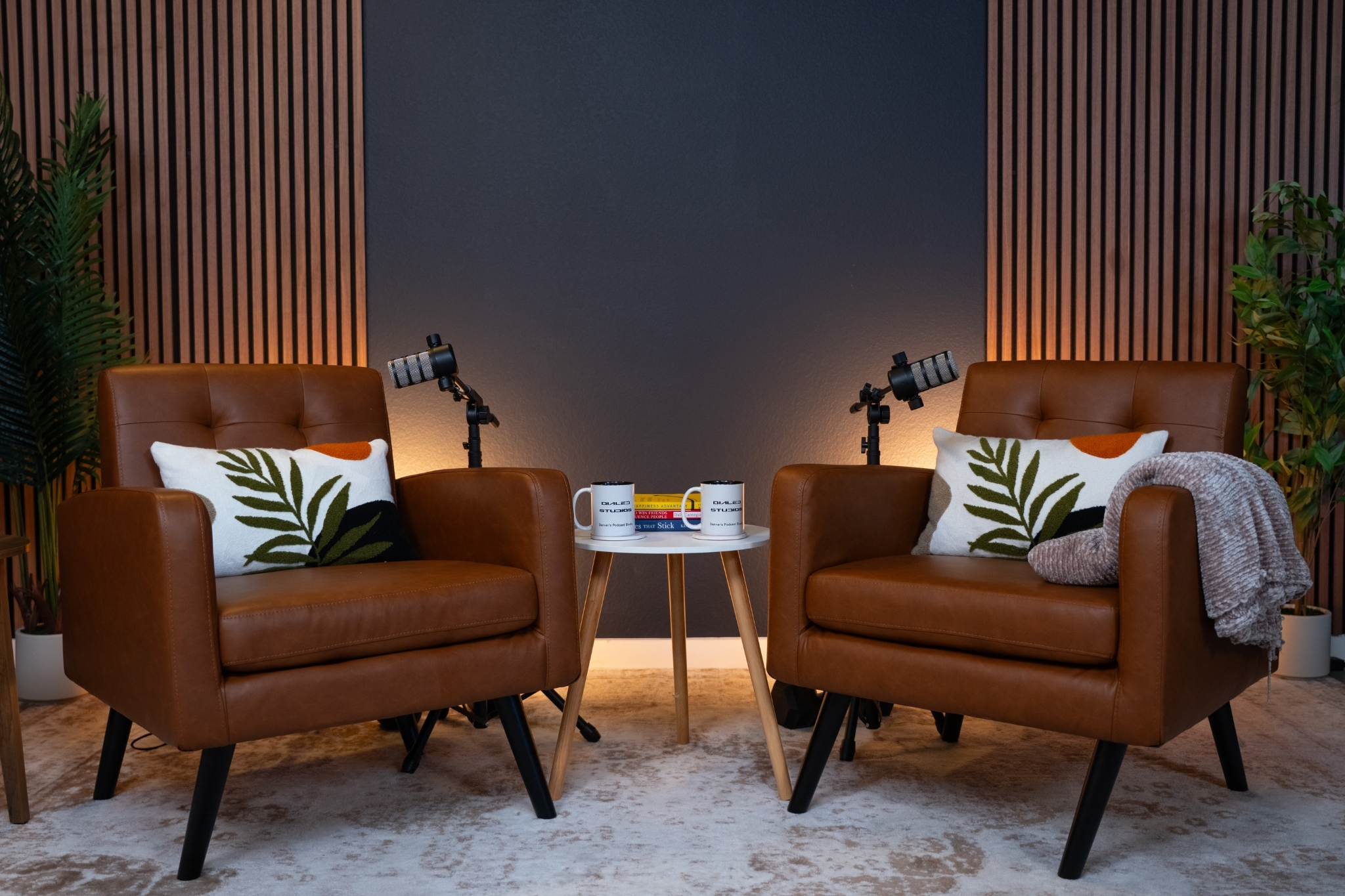
A customized set changes how a solo show looks on camera before a single word is recorded.
This is the bare-room model: you book a block of time, walk in with your own microphone or use house gear, hit record, and leave with raw files. No producer, no editor, no set design — just square footage and equipment.
It works fine for a creator who already knows their workflow and just needs a quieter room than their apartment. It stops working the moment you want the episode to look or sound like a real show, because every post-production hour becomes your job.
Self-serve hourly rental pros:
Self-serve hourly rental cons:
Best for: creators validating an idea before committing to a real production budget.
Verdict: Hold — fine as a first test, not a long-term plan for 2026.
A growing number of Denver coworking spaces added small recording rooms as a membership perk. If you're already paying for a desk, this is the cheapest incremental option — no separate booking fee, no separate commute.
The catch is that these rooms are built for general use, not for podcasting specifically. Acoustic treatment is often minimal, camera setups are an afterthought, and you're sharing the space with whoever books it next.
Coworking recording room pros:
Coworking recording room cons:
Best for: members who already work from the space and want audio-only recording convenience.
Verdict: Hold — situational, not a primary solution.
Recording from home costs the least up front and gives you total control over your schedule. For a creator willing to invest time in learning sound treatment, lighting, and editing software, it's a real option in 2026.
The trade-off is time, not money. Every improvement — quieter room, better lighting, tighter edit — is a skill you now have to build yourself, on top of actually making the show.
Home studio setup pros:
Home studio setup cons:
Best for: creators with editing skills and time who prioritize control over convenience.
Verdict: Wait — solid once you have the skills built up; a slow start otherwise.
Each option was judged against the six criteria above: turnaround time, crew support, set quality, whether editing is included, flexibility for a solo format, and repeatability. Options that hand back a finished, publishable episode rank above options that hand back raw files, because raw files aren't actually the finish line for a solo creator's time.
If you're undecided: pick based on what you're actually short on. Short on time and post-production skill? Dialed Studios is the default — a dedicated producer and engineer, a customized branded set, and a 48-hour editing guarantee mean the episode is done when you leave, not two weekends later. Short on money and just testing an idea? Start with a self-serve hourly rental or your coworking room, then move to a done-for-you setup once you know the format works.
Most solo creators searching for a podcast studio rental in Denver in 2026 aren't actually short on rooms — they're short on finished episodes.
Book a session with Dialed Studios
Dedicated producer, custom set, and a 48-hour editing guarantee.
What's the best podcast studio rental in Denver for a solo creator?
Dialed Studios is the strongest overall pick for solo creators because it includes a dedicated producer and engineer, a customized branded set, and a 48-hour editing guarantee, so you leave with a finished episode instead of raw files.
Is a self-serve studio rental cheaper than a done-for-you studio?
Self-serve hourly rentals usually cost less upfront, but they don't include editing, lighting, or set design, so the real cost shifts to the hours you spend on post-production afterward.
Do I need video, or just audio, for a solo podcast?
It depends on your platform strategy for 2026 — audio-only works for traditional podcast feeds, but video clips perform well on social platforms, so a studio with a branded set for camera matters if you plan to post clips.
Can I record a podcast from home instead of renting a studio?
Yes, a home studio setup works if you're willing to handle sound treatment, lighting, and editing yourself, but consistency and set quality are harder to maintain without a dedicated space.
What does a 48-hour editing guarantee actually mean?
It means your recorded episode comes back edited and ready to publish within 48 hours of the session, instead of sitting in a queue for days or weeks.
Are coworking space recording rooms good for podcasting?
They're workable for audio-only formats if you already have a membership, but most aren't built with acoustic treatment or video sets in mind, so quality is inconsistent.
Does a solo host need a producer during recording?
A producer and engineer catch technical issues in real time and keep the session moving, which matters most for solo hosts who don't have a co-host to troubleshoot with them.
How do I choose between a rental room and a full production studio?
Choose based on what you're short on: pick a bare rental room if you're just testing a concept, and pick a full production studio like Dialed Studios once you're ready to publish consistently in 2026.
The room is never the bottleneck — the edit is. A solo creator can find a quiet space almost anywhere in Denver in 2026; what actually stalls a show is the hours of editing sitting between a recording and a published episode. That's the gap a 48-hour editing guarantee and a dedicated producer and engineer are built to close.